Tuesday, July 5, 2011

Activity 6

Activity 6: States of Matter and Intermolecular Forces

To begin this activity, review the Content Slides in D2L on States of Matter and Intermolecular Forces. We are all familiar with the states of matter (solids, liquids and gases) for many substances. In the First Activity we explored these states of matter for water. In Activity 6, we would like to take our overall understanding of states of matter to the molecular level. We will use the States of Matter simulation at http://phet.colorado.edu/ . There are two key characteristics of molecules that determine their state of matter. The first one is the temperature of the matter, and the second one is the intermolecular forces (how well atoms/molecules stick to one another) between atoms and molecules.

One of the first things to think about here is temperature. Temperature and thermometers have a very similar relation to speed and speedometers. For all practical purposes, a thermometer is really a speedometer for molecular speed or motion. At this site (another good NSF funded science education site) http://www.visionlearning.com/library/module_viewer.php?mid=48 , is a good overview of temperature with a good image of the temperature scales and conversions between different scales. Notice that the Kelvin scale starts at zero and goes up from there. This is like our car speedometer, in that at 0 Kelvin (K), molecular and atomic motions stop. As the temperature rises, atoms and molecules begin to move faster and faster.

The second thing to consider is the intermolecular forces (attractions) that exist between molecules. In the D2L content slides there are a few types of attractions described, notice all of these are defined by the attraction that exists between positive and negative charges. Water is a great example of a molecule that has strong attractions that we call hydrogen bonding. It is this strong attraction that makes water a unique molecule on our planet. It turns out that the hydrogen atoms tend to be positive in charge, and the oxygen atoms tends to be negative in charge. 

Tasks to be completed for Activity 6

1. Convert 0°F, 32°F, 70°F, and 212°F to Kelvin

From
To Fahrenheit
To Celsius
To Kelvin
Fahrenheit (F)
F
(F - 32) * 5/9
(F - 32) * 5/9 + 273.15
Celsius (C or o)
(C * 9/5) + 32
C
C + 273.15
Kelvin (K)
(K - 273.15) * 9/5 + 32
K - 273.15
K


0°F                          255.37222 K

32°F                       273.15 K

70°F                       294.26111 K

212°F                     373.15 K

2. Complete the Teaching Idea: States of Matter Simulation Lab by Kelly Vaughan. Complete the lab worksheet as if you were a student, and then post this on your blog. You can scan it or just take a picture of it. 


3. In the States of Matter simulation, choose the Solid, Liquid, and Gas Tab at the top of the screen. Choose the water molecule and cool the water to 0 K. Describe how the water molecules are aligned and attracted to each other. Which atoms are attracted to which other atoms?

The oxygen atoms are attracted to each other so much that they hold their bond and the molecules don’t move much at all, if any. 

4. Switch to the Phase Changes Tab on the States of Matter simulation. Notice how on the bottom right there is a small red dot that indicates where the system is at as far as temperature, pressure and state of matter. Play with the simulation to notice changes, notice that when you push down the pressure can go way up and explode the box. On your blog, report a temperature and pressure required to make oxygen a liquid. This is sometimes how the oxygen exists in pressurized oxygen tanks, perhaps like ones you may use to go diving.

Temperature: 493 K

Pressure:  19-20 ATM

5. List and describe at least two Science Standards that this activity addresses.

Students in Wisconsin will investigate questions using scientific methods and tools, revise their personal understanding to accommodate knowledge, and communicate these understandings to others.

This is appropriate with this activity because we used scientific tools to help us understand the concept of science, pressure, and temperature.  Then, after this activity, we are to post our findings on our blog, which lets us communicate with others.

Students in Wisconsin will demonstrate an understanding of the physical and chemical properties of matter, the forms and properties of energy, and the ways in which matter and energy interact.

This activity allowed me to use a online tool to help me understand the physical and chemical properties of matter, the forms and properties of energy, and the ways they interact.  This tool covered everything in this standard very easily. 

Friday, July 1, 2011

Activity 5

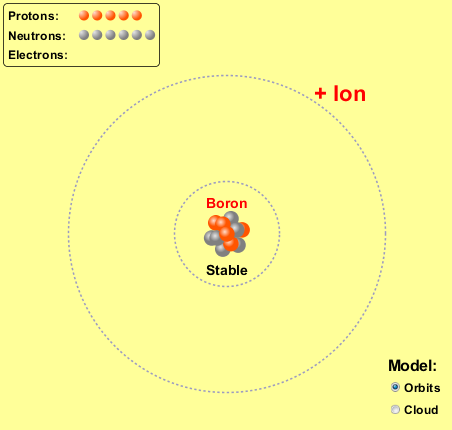
1. Run the Build an Atom simulation http://phet.colorado.edu/en/simulation/build-an-atom and build a neutral lithium atom and a neutral boron atom. Take a picture, or a screen shot, of these two atoms and place them on your blog. List the number of protons, neutrons and electrons for each. Also look up and post the density for each of the elements on your blog.

Element
Picture
Protons
Neutrons
Density @ 293 K (g/cm3)
Lithium (Li)
 
   
3
4
.53
Boron (B)
5
6
2.34


2. Define density and the equation for density and post on your blog.

Density is a physical property of matter.  It is the measure of the relative “heaviness” of objects with a constant volume.  It is measured in g/mL.  This could mean how “packed” the material appears to be.

Density =Mass/Volume

3. Run the Density simulation http://phet.colorado.edu/en/simulation/density and complete one (your choice) of the prepared Teaching Ideas and post your results on your blog.

Student Guide for Density Simulation

(note: “sink” means stays on the bottom)

Start:

Google “Phet Density sim”                                         

Click on the first link

Experiment with choosing a material:

Sinkers
Floaters
Density Given
Aluminum

2.7 kg/L

Wood
.40 kg/L

Styrofoam
.15 kg/L

Ice
.92 kg/L
Brick

2.00 kg/L


Try to get aluminum to float.  Talk with your partner about this possibility- can you change the mass of the aluminum block without changing the volume of the aluminum block?  No you cannot change the mass without changing the volume.


What do you and your partner notice about the density triangle at the bottom of the box?  Talk about why you think the slider moves or not.  Aluminum has the same density no matter what.  The volume changes with the mass so it will always stay the same.


How does the density of aluminum (2.70 kg/L) help explain what you see?  The density is at its highest which is why it sinks.  For example, Styrofoam is .15 kg/L which is a lot less dense.


Frame:  The aluminum will sink in the water because the density of the aluminum is 2.70 kg/L3 and the density of water is 1000 kg/L3.  We have learned that the density needs to be below 1 kg/L to float in water.


Density  = ----------   mass over volume equals density


In the “Blocks” box, click on Mystery:


Test the boxes in the water- just drag and drop!!! 


When you have determined which ones sink and float, fill in the data table for each box. 


Sample
Beginning amount of water (A)
Ending amount of water (B)
Volume  (L)
(difference B-A)
Mass (kg)
Density (kg/L)
What is it most likely made of?
(hint: use Show Table for help)
A
100-L
103.38 L
3.38
65.14
19.27
Gold
B
100-L
100.64 L
.64
.64
1
Water
C
100-L
104.08 L
4.08
4.08
1
Water
D
100-L
103.10 L
3.08
3.10
.99
Water
E
100-L
101.00 L
1.00
3.53
3.53
Diamond


Look closely at green box C and red box D and discuss your observations.  The two are very closely related in density and I have concluded that they must both be water.


List three observations you made while comparing the two boxes.


1st observation
2nd observation
3rd observation
Similar size
Both float with a slight difference
Don’t have the same ending amount of water.


Dear Students,


I am back to building a boat.  I want to build the best boat ever!!  My partner says I cannot put a refrigerator and a television in my boat because that would make it too heavy-and the boat might sink. Then we would be swimming with the sharks!!!!


What would you advise me to tell my friend? Is she right or wrong?  Be sure to give me some evidence based on what you learned from the boxes or other places in this activity.


Signed, your teacher


I would say that there is a possibility if there is a large enough surface area and buoyancy.  When experimenting with the boxes, I found that if you have a box with a great buoyancy, it will hold another box above it if the circumstances are right.

4. Complete the Mystery Blocks activity on the Density simulation. Post on your blog the data you collected (mass, volume, and density) and the identification of the material and the known density.

Sample
Beginning amount of water (A)
Ending amount of water (B)
Volume  (L)
(difference B-A)
Mass (kg)
Density (kg/L)
What is it most likely made of?
(hint: use Show Table for help)
A
100-L
103.38 L
3.38
65.14
19.27
Gold
B
100-L
100.64 L
.64
.64
1
Water
C
100-L
104.08 L
4.08
4.08
1
Water
D
100-L
103.10 L
3.08
3.10
.99
Water
E
100-L
101.00 L
1.00
3.53
3.53
Diamond


5. Identify and post on your blog the Science Standards that could be met through these activities completed in Activity 5

Content Standard: Students in Wisconsin will understand that there are unifying themes: systems, order, organization, and interactions; evidence, models, and explanations; constancy, change, and measurement; evolution, equilibrium, and energy; form and function among scientific disciplines.

Content Standard: Students in Wisconsin will investigate questions using scientific methods and tools, revise their personal understanding to accommodate knowledge, and communicate these understandings to others.

Content Standard: Students in Wisconsin will demonstrate an understanding of the physical and chemical properties of matter, the forms and properties of energy, and the ways in which matter and energy interact.

Content Standard: Students in Wisconsin will demonstrate an understanding of the characteristics and structures of living things, the processes of life, and how living things interact with one another and their environment.